
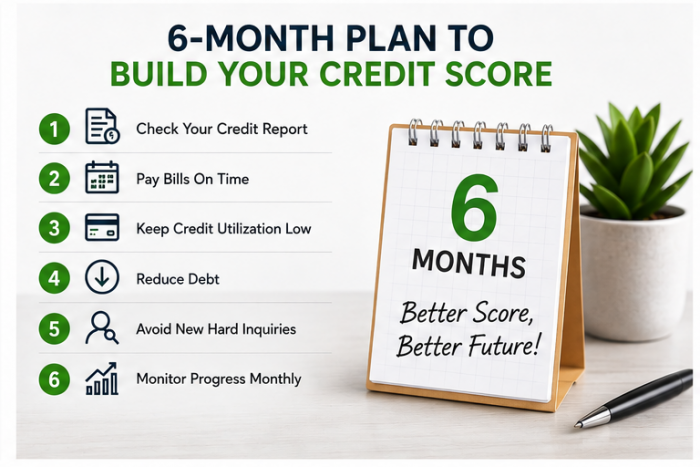
Most people spend years trying to fix their credit score when the truth is, you can make serious progress in just six months. Not a little progress. Real, meaningful progress that opens doors to better loans, lower interest rates, and financial opportunities that feel completely out of reach right now. And the wild part? The steps are not complicated. They are just things nobody ever taught you. So today we are breaking down exactly how to build your credit score in six months, step by step, no fluff, no nonsense.
Before we get into the strategy, let me ask you something. Have you ever been denied for a credit card, an apartment, or a loan and felt that gut punch of embarrassment? Maybe you got approved but the interest rate was so ridiculous it felt like a punishment. That happens because your credit score is essentially your financial reputation, and right now, a lot of people are walking around with a reputation that does not reflect who they actually are or what they are capable of. That ends today.
Here is what we are covering. We are going to talk about what actually moves your credit score, what you should do in the very first two weeks, how to build momentum over months one through three, how to accelerate in months four through six, and the mistakes that silently destroy your progress even when you think you are doing everything right. Stay until the end because that last section saves people hundreds, sometimes thousands of dollars every single year.
Let us start with understanding what your credit score actually measures, because you cannot win a game you do not understand. Your score is calculated based on five main factors. Payment history is the biggest one, making up about thirty five percent of your score. This is simply whether you pay your bills on time. Then there is credit utilization, which is about thirty percent. This measures how much of your available credit you are actually using. Length of credit history accounts for about fifteen percent. The mix of credit types you have is around ten percent. And new credit inquiries make up the remaining ten percent. Understanding these percentages matters because it tells you where to put your energy. Spoiler alert, it is mostly on those first two.
Now let us talk about the very first thing you need to do before any strategy kicks in. Pull your credit reports. You can get them for free. Check all three bureaus, Equifax, Experian, and TransUnion. You are looking for errors, and errors are shockingly common. We are talking about accounts that are not yours, incorrect payment statuses, debts that have already been paid showing as open, or old information that should have aged off your report. If you find errors, dispute them immediately. A single inaccurate late payment removed from your report can bump your score significantly. This step alone, without changing a single financial behavior, has helped people jump thirty to fifty points in a matter of weeks.
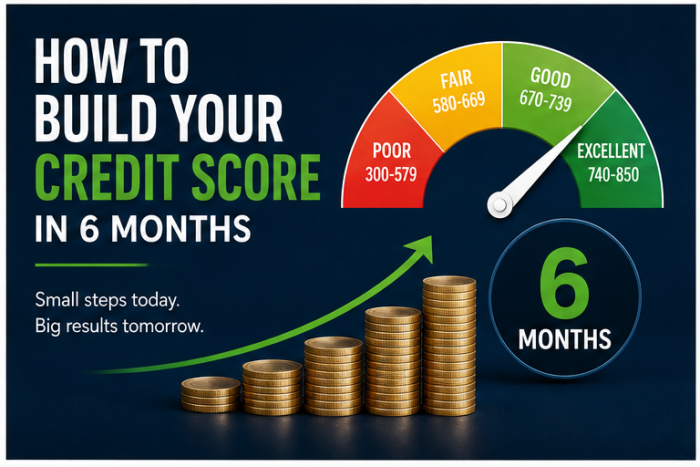
Once your reports are clean or at least reviewed, it is time to set your foundation. Months one and two are all about eliminating the damage and creating consistency. If you have any past due accounts, your absolute priority is bringing those current. A single missed payment can tank your score by sixty to one hundred points depending on where you started. Getting that account current stops the bleeding. You are not going to erase the negative mark immediately, but you will stop it from getting worse, and on time payments from this point forward start rebuilding your record.
Next, tackle your credit utilization. This is one of the fastest levers you can pull. If you have a credit card with a five hundred dollar limit and you are carrying a four hundred dollar balance, your utilization on that card is eighty percent. That is destroying your score. The general guidance is to keep utilization below thirty percent, but if you really want to see your score climb fast, aim for under ten percent. Pay that balance down aggressively. Even if you can only get it to forty or fifty percent right now, that improvement will show up within one to two billing cycles.
This is also the time to set up autopay for everything. We are talking every bill, every minimum payment, every account. Payment history is thirty five percent of your score, and one missed payment because you forgot is a completely avoidable disaster. Set it and protect it.
Now here is something that surprises a lot of people in months one and two. Do not close your old credit cards even if you do not use them. When you close a credit card, you reduce your available credit, which raises your utilization ratio. You also potentially shorten your average credit history. Both of those outcomes hurt your score. Keep those old cards open, use them for a small recurring purchase like a streaming subscription, and pay them off every month. Your score will thank you.
Moving into months three and four, this is where you start building rather than just repairing. If you do not have a credit card at all, this is the time to get one. If your score is too low to qualify for a traditional card, look into secured credit cards. A secured card requires a deposit that becomes your credit limit. You use it like a normal card and the activity gets reported to the credit bureaus just the same. Use it for small purchases, pay the full balance every single month, and watch your score climb. Several banks and credit unions offer secured cards specifically designed for people building or rebuilding credit.
Another tool that not enough people talk about is a credit builder loan. These are offered by some credit unions and online lenders. The way they work is slightly counterintuitive. You make monthly payments toward a loan, but you do not receive the money until the loan is paid off. The whole point is to create a track record of on time payments. It builds your payment history and often your credit mix at the same time. If you have access to one of these, they can be genuinely powerful, especially in this building phase.

You should also look into whether you can become an authorized user on someone else’s credit card. If a parent, spouse, or trusted friend has a card with a long history and low utilization, being added as an authorized user means their positive history gets associated with your credit profile. You do not even have to use the card. Just being on the account can lift your score. This is completely legitimate and widely used.
As you move into months five and six, you are in the acceleration phase. By now, assuming you have been consistent, you should already be seeing movement in your score. Your job in these final two months is to maintain momentum and start optimizing. Keep utilization low. Keep every payment on time. Do not apply for multiple new credit accounts at once because each hard inquiry can shave a few points off your score temporarily. Be strategic about any new applications.
Something worth knowing here is that you can actually request a credit limit increase on existing cards. If your income has been stable and you have been making on time payments, many card issuers will approve a limit increase. Here is the key though. Do not increase your spending. The goal is to have a higher limit with the same balance, which instantly lowers your utilization ratio. This can move your score noticeably without you spending an extra dollar.
Also by this point, if you have any collections accounts, it is worth exploring pay for delete agreements with the collection agency. This means you offer to pay the debt in exchange for them removing the negative mark from your credit report. Not every agency will agree to this, but some will, and if you get it in writing before paying, the removal of that collections account can significantly boost your score.
Now let me talk about the mistakes that quietly kill progress. The first one is applying for too much new credit at once. Every time you apply for a new account, a hard inquiry gets added to your report. One or two is fine. Four or five in a short period sends a signal that you are in financial distress. Space out any new applications. The second mistake is maxing out cards even when you plan to pay them off in full. If your statement closes before your payment is processed, the high balance gets reported. Pay down balances before the statement closing date to keep your reported utilization low. The third mistake is ignoring small debts. A sixty dollar medical bill that goes to collections can be just as damaging as a large one. Monitor everything.
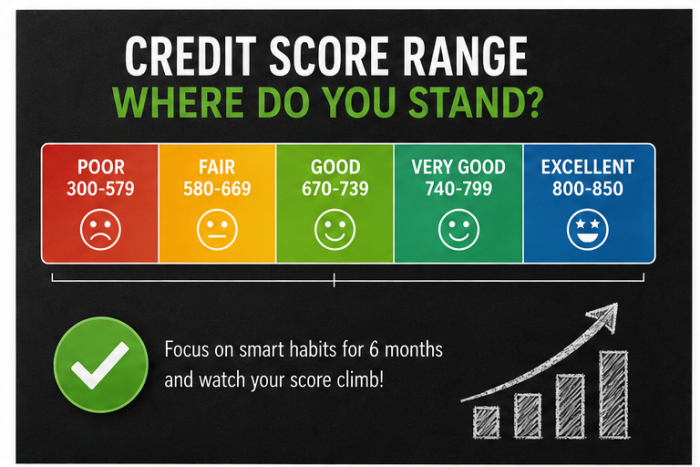
Six months of consistent, intentional action following these steps is genuinely enough to see transformational change in your credit score. People who start in the low five hundreds frequently reach the mid to high six hundreds or even cross into the seven hundreds with disciplined focus. That range opens up completely different financial products, significantly lower interest rates on loans, and a sense of financial confidence that changes how you move through the world.
Your credit score is not a permanent verdict on who you are. It is a snapshot of recent behavior, and behavior can change starting right now. You have the roadmap. The only thing left is to actually use it. Start with pulling those credit reports today, not tomorrow, not when things settle down. Today. Your future self will look back on this moment as the turning point.