
If you served and now carry a credit card balance you can’t shake, you are a target. Search for credit card debt relief for veterans and you will find real programs sitting next to companies that promise to wipe out your debt for an upfront fee. Telling them apart matters, because a scam can cost you thousands and wreck your credit.
Here is the short answer. Legitimate help comes from nonprofit credit counseling agencies, your card issuer’s hardship program, and federal protections like the SCRA 6% interest cap. The SCRA applies to debt you took on before active duty, so check your dates. There is no government program that forgives credit card debt just because you are a veteran. Anyone who says otherwise is selling something.
Below, we explain how each real option works, who qualifies, and what it costs. You will also learn the red flags of veteran debt scams, such as guaranteed forgiveness and fees charged before any work is done, so you can choose a path with confidence.
Why veterans need a different approach to card debt
What makes veteran card debt different
Veterans often run up balances for reasons generic advice ignores. A gap between your last military paycheck and your first civilian one, a cross-country move, or a slow VA claim can push groceries and rent onto a card. Transition gaps are a common starting point, and 24% APR turns a short gap into a long problem.
Debt can also carry extra risk for you. If you hold or want a security clearance, unpaid or defaulted accounts can count against you in a financial review. That makes avoiding default more urgent than it is for most borrowers.
How your benefits and legal protections change the picture
Your income may include VA disability or pension payments. VA benefits are generally shielded from garnishment by credit card creditors, which limits what a collector can take. It does not make the debt disappear. A lawsuit can still hurt your credit, and a nonprofit counselor can count those benefits as income when building a realistic budget.
Protections are narrower than many people assume, so check which ones fit your situation.
| Protection | Who it covers | Limit to know |
|---|---|---|
| SCRA 6% interest cap | Service members on active duty, including activated Guard and Reserve | Debt must predate your service. You must send a written request with a copy of your orders |
| Military Lending Act 36% cap | Active-duty members and dependents | Does not cover veterans, and only applies to new credit |
| VA benefit garnishment protection | Veterans receiving VA benefits | Does not stop lawsuits or credit damage |
Being a veteran does not erase your card debt, but it does change which tools you can use and which offers you should walk away from.
The practical takeaway is simple. Credit card debt relief for veterans works best when you pair standard options like counseling and hardship plans with the protections you have actually earned, not with promises of forgiveness.
How to get real credit card debt relief as a veteran
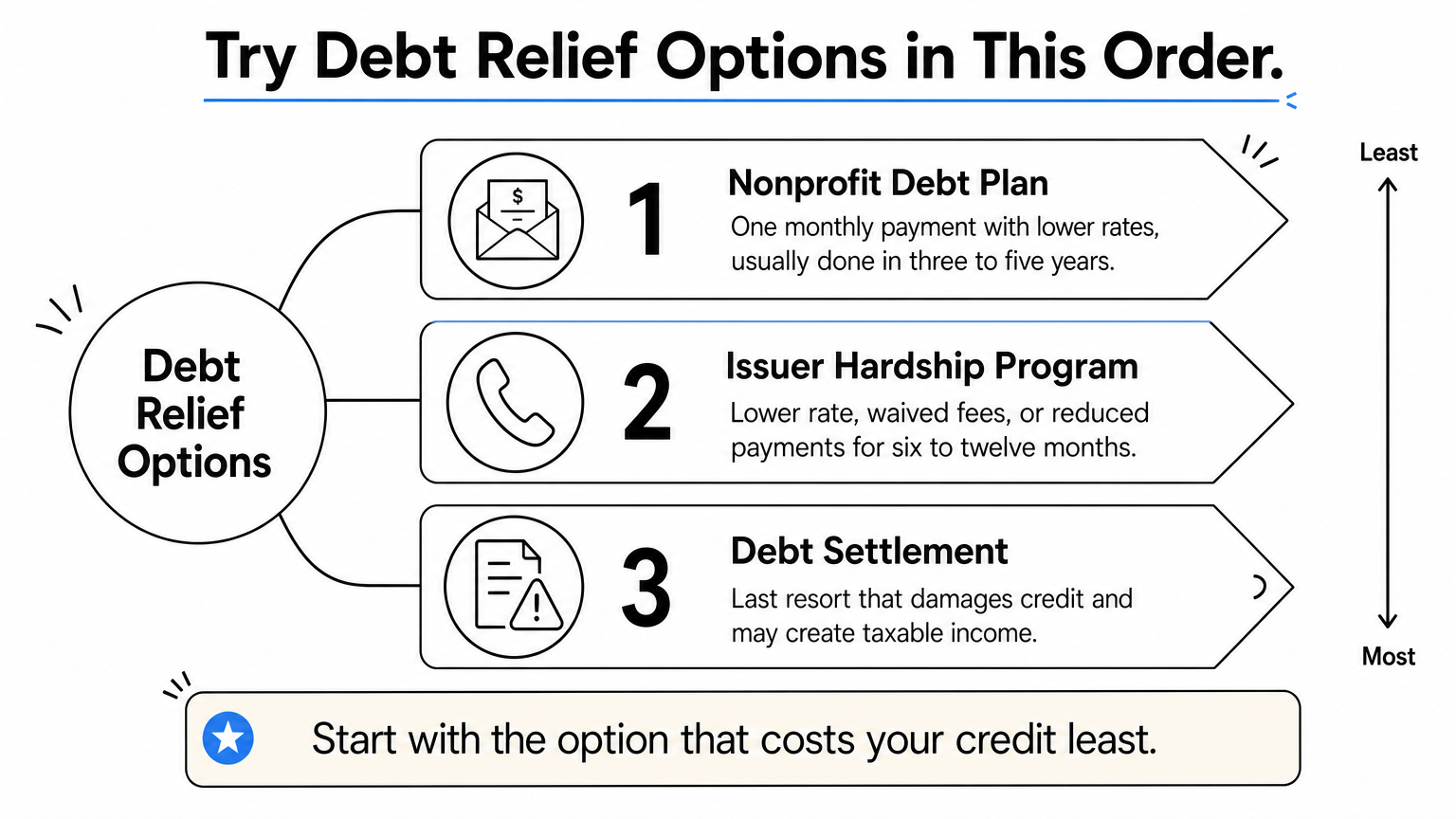
Real credit card debt relief for veterans comes from three ordinary tools, used in a sensible order. Try the option that costs your credit the least first, and move down the list only if it fails.
Start with a nonprofit debt management plan
Nonprofit credit counseling comes first. A debt management plan combines your cards into one monthly payment, and the agency negotiates lower rates, often into single digits. Most plans finish in three to five years. The trade-off is that enrolled cards usually get closed. Before you sign, confirm three things:
- The agency is a registered nonprofit.
- The first counseling session is free.
- Every fee is written down before you pay anything.
Ask your issuer about hardship programs
Hardship programs are the next step. Call the number on your card and ask for the hardship department. Issuers can lower your rate, waive fees, or reduce payments for six to twelve months, especially if you explain a job change or a delayed VA claim. Ask for the rate cut first, because it saves the most.
Get any agreement in writing. Debt settlement, where you pay less than you owe, belongs at the bottom of the list. It damages your credit, and the forgiven amount may count as taxable income.
Start with the safest, cheapest option and escalate only when it fails.
Military protections that can lower your interest
Claim the SCRA 6% cap if you qualify
The Servicemembers Civil Relief Act can cut your card rate to 6% a year, fees and service charges included. Veterans can still use it. If you left service within the last 180 days, you can request the cap back to your first day of active duty. Follow these steps:

- Pull your orders and the dates your active duty began and ended.
- Write to each issuer that holds a balance you opened before service.
- Enclose a copy of your orders and send the letter by certified mail.
- Ask for written confirmation that your rate and minimum payment were lowered.
The SCRA cap is forgiveness, not deferral, so interest above 6% is gone for good.
If the SCRA does not apply to you
Past that 180-day window, or for debt opened during service, the law won’t help. Your service still counts, though. Mention it when you call the hardship department, because some issuers run military support programs with lower rates or waived fees. Policies vary, so ask directly and get the answer in writing.
Best results come from stacking tools. Credit card debt relief for veterans often means using the SCRA cap on older balances, then moving everything else into a nonprofit plan or hardship agreement.
How to spot veteran debt relief scams
Red flags that give a scam away
Scammers know veterans trust fellow service members, so they borrow military language and fake badges. Real help never involves a secret government program. Watch for these warning signs:
- Guaranteed forgiveness, or a promise to cut your balance by 50% to 80%.
- Fees charged before any debt is settled. The FTC says upfront fees are banned for telemarketed debt relief.
- Advice to stop paying your cards and send money to the company instead.
- Talk of a special "VA debt forgiveness" program. None exists for credit cards.
- Refusal to put terms in writing.
A company that wants your money before it has done any work is not helping you.
How to check a company before you pay
Start with the paper trail. Search the company name with your state attorney general’s consumer protection office and the CFPB complaint database. A pattern of complaints about fees or ruined credit is reason enough to walk away.
Next, ask for a written fee schedule and the agency’s nonprofit status, as covered earlier. If you already paid a scam, report it at ReportFraud.ftc.gov and tell your card issuer. Credit card debt relief for veterans should leave you with a lower rate or a clear plan, not a stranger holding your account details.
What to prepare before you ask for help
Preparation changes how counselors and issuers treat you. Before you pursue credit card debt relief for veterans, spend an hour gathering paperwork and numbers. You will get faster answers and spot bad offers sooner.
Gather your documents
Start with the paper. A counselor can build a plan in a single session if you bring the right documents:

- The latest statement for each card, showing balance, APR, and minimum payment
- Your DD-214 and any orders that show active duty dates
- A VA award letter, pay stubs, or other proof of income
- A list of monthly bills, from rent to groceries
- Free credit reports from AnnualCreditReport.com
Set your numbers and keep a call log
Next, add up what you owe and what you can pay. Subtract essential bills from your monthly income, VA benefits included. The leftover is your realistic monthly payment, and it shows whether a hardship plan or a debt management plan fits.
Know your budget before anyone quotes you a price.
Finally, log every call. Write the date, the representative’s name, and what they promised, then ask for confirmation in writing. A call log protects you if an issuer forgets a rate cut, and it gives you evidence if you ever need to file a complaint.
Where to go from here
Real credit card debt relief for veterans is not a secret program. It is a short list of ordinary tools: a nonprofit debt management plan, a hardship agreement with your issuer, and the SCRA cap if your dates qualify. Settlement stays a last resort, and anyone who promises forgiveness or asks for fees up front is running a scam.
Your next move is small. Gather your statements, DD-214, and proof of income, then call one nonprofit counselor and your issuer’s hardship department this week. Log every conversation and get every promise in writing. Interest costs you money every day you wait.
You do not have to figure out the rest alone. For plain-English guides on balance transfers, consolidation loans, and nonprofit plans, visit Credit Card Solution’s debt relief programs guide and choose the option that fits your credit score.


No Responses