
The best debt relief programs Colorado residents can use start with a nonprofit debt management plan, which cuts your interest rate without a new loan or a major credit hit. A consolidation loan suits you if your score is 670 or higher. State and local assistance frees up cash for essentials. Settlement and bankruptcy are for debt you truly cannot repay. No Colorado state program pays off credit card balances for you.
If you carry cards at 18% to 29%, minimum payments barely touch the principal. Ads promising to "wipe out" your debt make it hard to tell real help from a sales pitch. Colorado regulates debt management and debt settlement providers, but regulation does not make every option right for your situation.
This guide ranks five options in the order most people should consider them. Each gets the same three checks: how it works, who it fits, and what it costs. We are an educational site, not a lender or a debt relief company, so nothing here pushes you toward a paid enrollment.
1. Nonprofit debt management plan
A debt management plan (DMP) is usually the first stop among debt relief programs in Colorado, because it lowers your interest without a loan and without wrecking your credit.
How it works
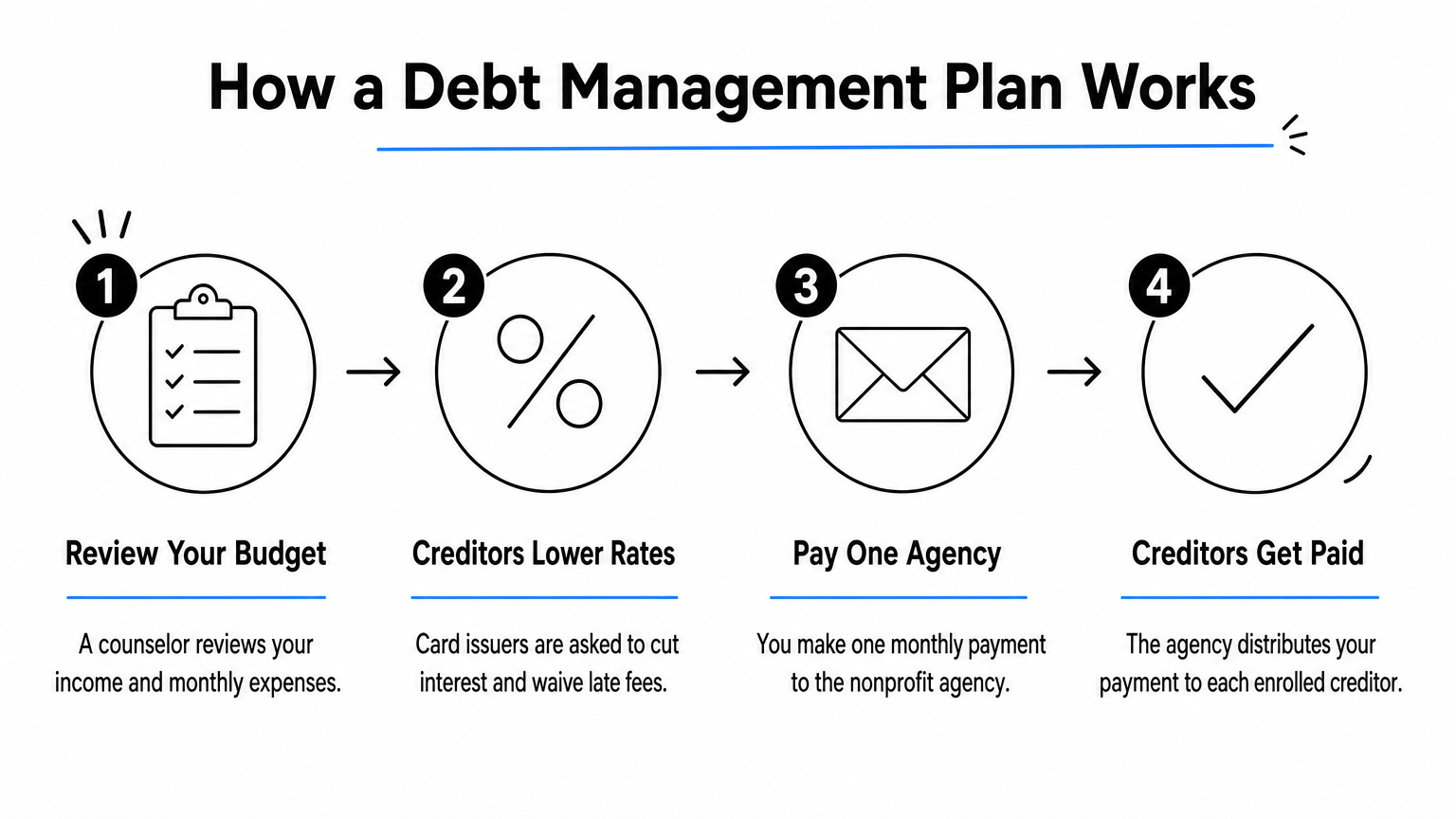
A nonprofit credit counseling agency reviews your budget, then asks your card issuers to lower your interest rates and waive late fees. You make one monthly payment to the agency, and it pays your creditors. Most plans run three to five years. Creditors often cut rates to around 8% or less, though terms vary by issuer.
A DMP does not shrink what you owe. It strips out most of the interest so every dollar goes to principal.
Who it fits
A DMP suits you if you have steady income but balances too big to pay off at 20% interest, and a credit score too low for a good consolidation loan. It covers credit cards and some other unsecured debts. It does not cover mortgages, car loans, or most student loans. You also have to stop using the enrolled cards, which is the hard part for many people.
Costs and risks
Expect a small setup fee and a monthly fee. Get the full fee schedule in writing before you sign. Enrolled cards are usually closed, which can dip your score at first, but on-time payments help it recover. Miss payments and creditors can withdraw the lower rates.
Before you enroll, check how the agency is regulated by the Colorado Attorney General’s Consumer Credit Unit, which oversees debt management providers in the state. Ask whether it is accredited by the National Foundation for Credit Counseling.
2. Debt consolidation loan or 0% balance transfer
Debt consolidation replaces several high-rate cards with one lower-rate debt, and it works best for Colorado borrowers whose credit is still in good shape.

How it works
A personal loan pays off your cards, and you repay it in fixed monthly payments, often over two to seven years. A 0% balance transfer card moves your balances to a new card with a promotional rate, often 12 to 21 months, in exchange for a transfer fee. Credit unions are worth a quote alongside banks and online lenders.
Who it fits
Lenders reward a score of about 700 or higher with their best rates. A score from 670 to 699 gets fair rates, and below 670 the loan may cost nearly as much as your cards. A transfer card only makes sense if you can clear the balance inside the promo window. A $9,000 balance over 18 months means $500 a month.
Consolidation fixes the interest rate, not the spending habit that built the balance.
Costs and risks
Watch these costs:
- Some lenders charge an origination fee, deducted from the loan amount.
- Transfer cards typically charge 3% to 5%, so moving $9,000 costs $270 to $450.
- When the promo period ends, any leftover balance reverts to the standard rate.
- Running the paid-off cards back up is the biggest risk of all.
Skip home equity loans for this job. They turn unsecured card debt into debt backed by your house.
3. Colorado state and local assistance programs
Colorado does not run a program that pays off credit card debt, but state and local aid can cover essentials so you have cash left for your debts.
How it works
The Colorado Department of Local Affairs lists housing stability programs, rental assistance, and disaster relief for residents. Dialing 211 reaches Colorado 211, which points you to local help with utilities, food, and housing. What is available depends on your county and on current funding.
Who it fits
This route fits you if a job loss, medical bill, or rent increase pushed you behind. Stabilizing your housing and bills first makes any debt relief programs in Colorado easier to stick with. Colorado Legal Services also offers free civil legal help to residents who qualify by income, which matters if a collector has sued you.
Assistance will not erase a card balance, but it can free the monthly cash that makes a repayment plan possible.
Costs and risks
Applying costs nothing, but waitlists, income limits, and funding gaps are common. Pandemic-era programs such as the Colorado emergency rental assistance effort were temporary, so confirm what is open before you count on it.
Be wary of anyone who charges a fee to "find" hardship grants for credit card debt. No general government grant program pays off personal card balances, and those offers are a common scam.
4. Debt settlement
Debt settlement means paying a creditor less than you owe, and it is the riskiest of the options that avoid court.
How it works
You or a settlement company negotiate a lump-sum payoff for less than the balance. Companies usually tell you to stop paying your cards and deposit money into a savings account. When enough builds up, they make offers. The process often takes two to four years, and creditors are not required to accept.
Who it fits
Settlement makes sense only if you are already delinquent, cannot afford DMP payments, and want an alternative to bankruptcy. Check the age of the debt first. Colorado’s statute of limitations on most consumer debt is six years, and collectors generally cannot sue on time-barred debt. Talk to a lawyer or legal aid before paying anything on an old account.
Costs and risks
The downsides are real:
- Fees commonly run 15% to 25% of the enrolled debt.
- Under the FTC’s Telemarketing Sales Rule, a company cannot charge before it settles a debt.
- Late fees, interest, collection calls, and lawsuits can pile up while you stop paying.
- Your score can fall sharply.
- Forgiven debt of $600 or more may be reported to the IRS and counted as taxable income.
Confirm any company’s registration with the Colorado Attorney General’s office before handing over a dollar.
If a settlement company promises a fixed percentage off before it has seen your accounts, walk away.
5. Chapter 7 or Chapter 13 bankruptcy
Bankruptcy is the last resort among debt relief programs in Colorado, but it can be the right call when your debts exceed what you can repay in about five years.

How it works
Both chapters are filed in federal court and trigger an automatic stay, which stops collection calls and lawsuits. Chapter 7 sells nonexempt property and discharges most unsecured debt within months. Chapter 13 sets a three-to-five-year repayment plan, and any remaining qualifying unsecured debt is discharged at the end.
You must finish credit counseling with an approved agency within 180 days before filing. The U.S. Trustee Program lists approved providers at justice.gov/ust.
Who it fits
Chapter 7 requires passing a means test, which compares your income to the Colorado median for your household size. If you earn more, Chapter 13 is the usual route. It also helps you catch up on a mortgage or car loan and keep the property. Consult a bankruptcy attorney, since many offer a free or low-cost first consultation.
Bankruptcy is not failure. It is a legal reset that works when no repayment plan can.
Costs and risks
Filing fees run a few hundred dollars, plus attorney fees. Chapter 7 stays on your credit report for 10 years and Chapter 13 for seven. Child support, most taxes, and most student loans usually survive. Colorado’s property exemptions decide what you can keep, so have an attorney apply them to your situation.
Picking the right first step
Start with the least damaging option that your numbers can support. If your income is steady, a nonprofit debt management plan or a consolidation loan will likely get you out of credit card debt without lasting harm. If a crisis is driving the problem, use state and local assistance to stabilize first. Settlement and bankruptcy come later, and only after you check the fees, the registration, and the long-term credit cost.
Whatever you choose, get every promise in writing and never pay an upfront fee for debt help. A few hours of comparing now can save thousands in interest and fees.
For more plain-English guidance on balance transfers, consolidation, and getting out of debt, browse the credit card debt guides at Credit Card Solution.