
Collection calls won’t stop, a lawsuit letter just showed up, and you’re wondering if you need a lawyer just to deal with your credit card debt. That’s exactly when most people start searching for debt settlement attorneys, and for good reason. Unlike a debt settlement company, an attorney can actually represent you in court, stop a garnishment, and negotiate directly with creditors who won’t budge for anyone without a law license behind them.
This article tells you exactly when hiring a lawyer makes sense versus when it’s overkill, and how to tell a real attorney for debt settlement from a settlement firm just borrowing legal-sounding language. You’ll learn what these attorneys actually do, what they charge, and the questions that expose the difference between a licensed professional and a sales pitch.
We’ll walk through how to vet debt settlement lawyers, what a free consultation should actually cover, and red flags that mean you should hang up and call someone else. If you’re staring down five-figure credit card balances and considering legal help, you’ll leave this article knowing how to find and hire the right one, not just any name that shows up in a Google ad.
Why hiring a debt settlement attorney matters
A debt settlement company can call your creditors and ask for a lower payoff, but it can’t step into a courtroom on your behalf. A licensed attorney can file an appearance, respond to a summons, and argue your case if a creditor sues you over an unpaid balance. That distinction matters more than most people realize until they’re holding a court date. Once a lawsuit is filed, you’re no longer just negotiating, you’re defending yourself in a legal proceeding, and only a bar-licensed professional can do that for you.
An attorney can appear in court for you; a settlement company can only make phone calls.
Creditors also behave differently when a law firm sends the letter instead of a settlement negotiator. Attorneys can invoke legal leverage a settlement rep simply doesn’t have, like pointing out statute of limitations issues, procedural errors in a collection lawsuit, or violations of the Fair Debt Collection Practices Act. That leverage often produces faster, larger settlements than a straightforward hardship pitch.
Situations where legal help isn’t optional
Whether you really need a debt settlement lawyer becomes a far more urgent question in specific circumstances:
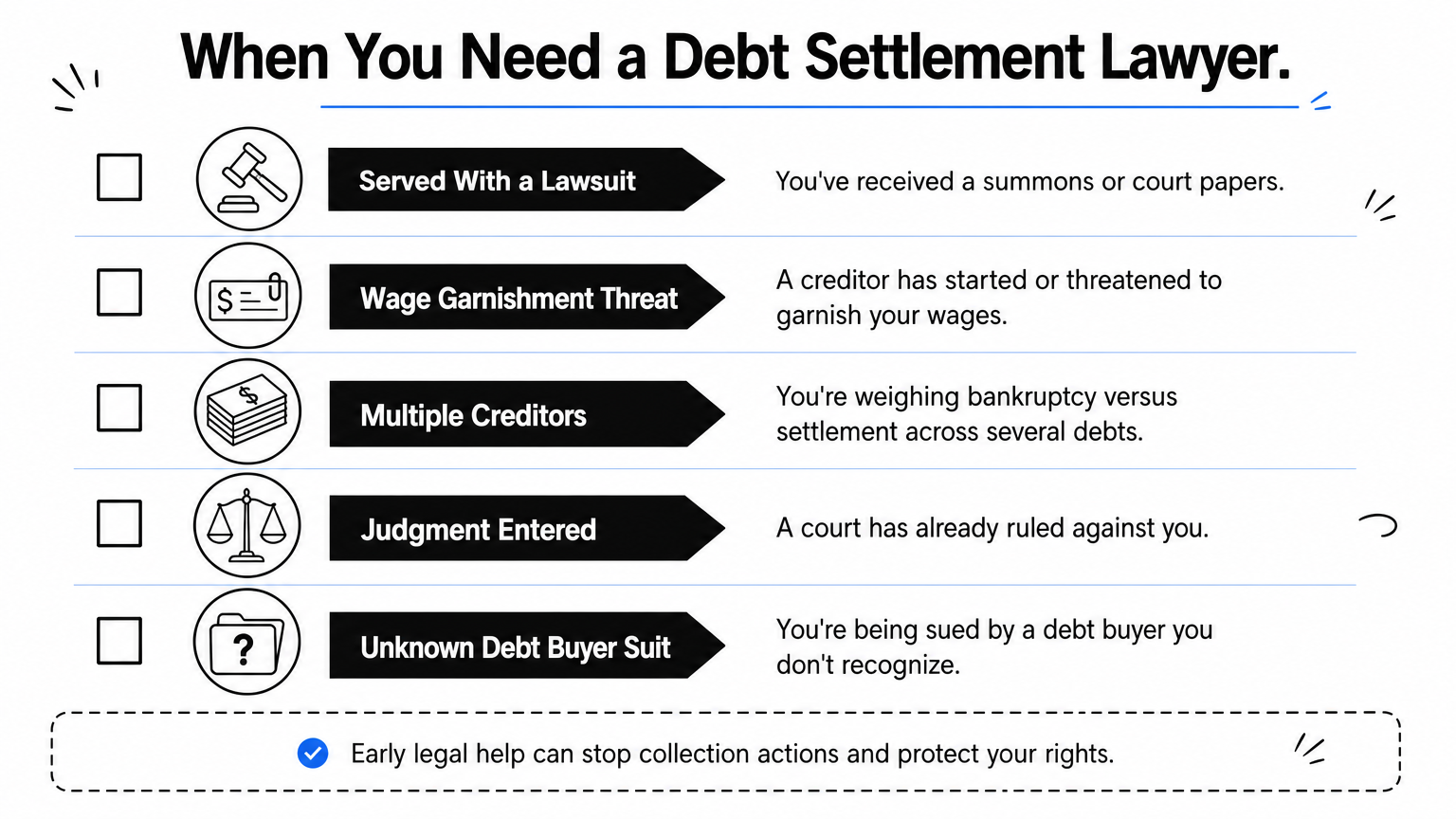
- You’ve already been served with a lawsuit or summons
- A creditor has threatened or started wage garnishment
- You’re juggling debt from multiple creditors and weighing bankruptcy or debt settlement as an alternative
- A judgment has already been entered against you
- You’re being sued by a debt buyer you don’t recognize
If none of those apply and you’re simply behind on payments with no legal action yet, a nonprofit debt management plan or a straightforward settlement approach may solve the problem without legal fees. Our comparison of debt settlement vs. debt consolidation breaks down when that route makes more sense than paying for representation you don’t need yet.
How to find and hire the right debt settlement attorney
Start with your state bar association’s referral service, not a random search result. Every state bar runs a lawyer referral directory where you can filter by practice area and location, and every attorney listed has an active license in good standing. That single check eliminates the settlement companies that dress up their sales reps as "legal specialists" without actually employing a lawyer.
Narrow your list to attorneys who specifically practice consumer debt defense or debt settlement, not general practitioners who dabble in it. Ask each one these questions during your free consultation:
- Are you licensed to practice in my state, and can you represent me in court here?
- How many debt settlement or collection defense cases have you handled this year?
- Will you personally handle my case, or does it go to a paralegal or case manager?
- What’s your fee structure, and is any of it charged before you settle a debt?
- Can you name three creditors you’ve negotiated with recently?
Request references or check the attorney’s record with your state bar’s disciplinary database before signing anything. A clean record and specific, confident answers to those questions tell you more than any five-star review online.
Compare at least two attorneys before committing. Pricing and communication style vary widely between solo practitioners and larger consumer law firms, and the cheapest option isn’t always the one who gets your balances reduced the most or handles a lawsuit the fastest if one lands on your doorstep.
What debt settlement attorneys typically cost
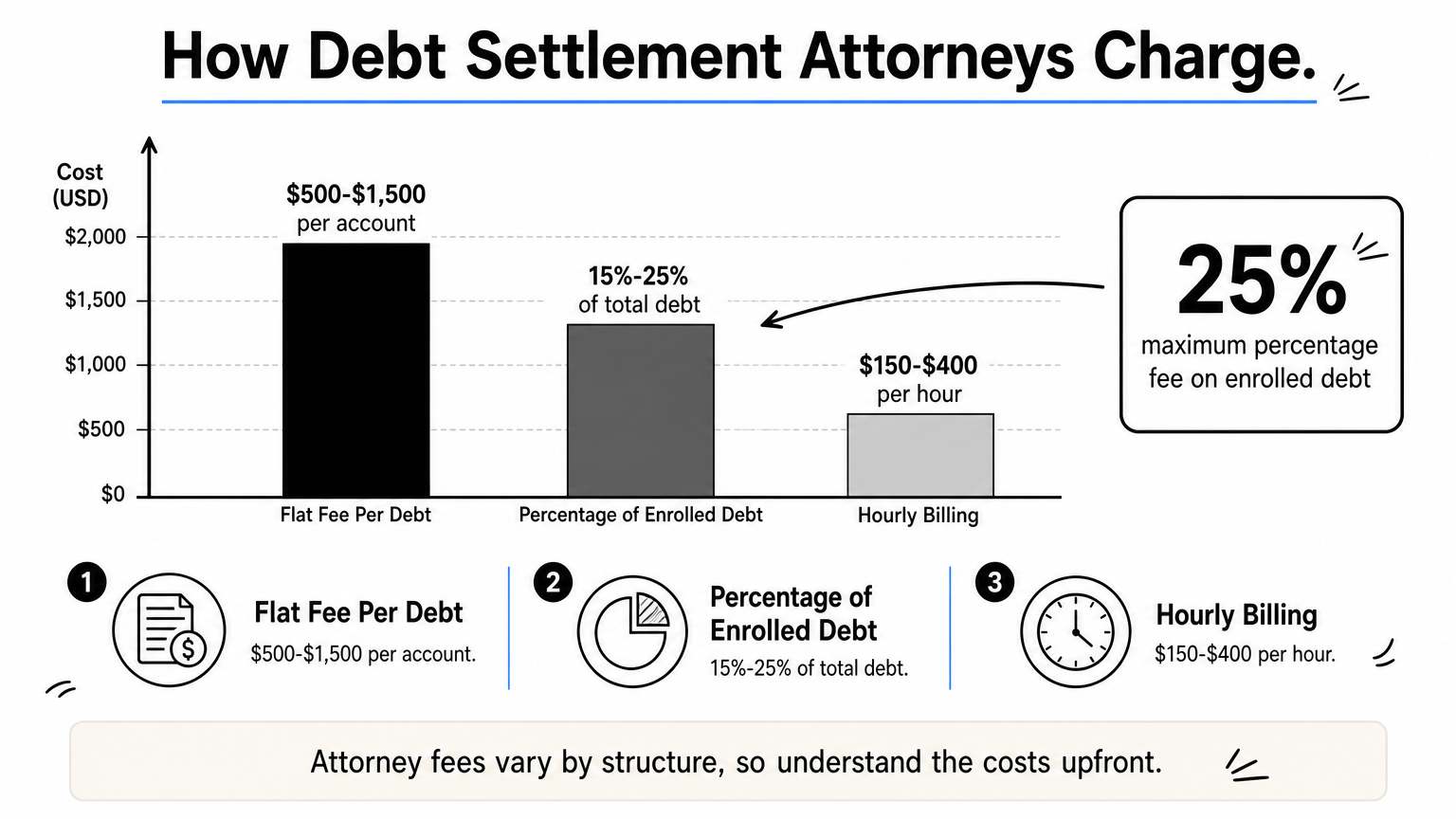
Cost structures vary more among attorneys than they do among settlement companies, so understand what a debt settlement attorney does and when to hire one before you sign anything. Most debt settlement lawyers charge one of three ways: a flat fee per creditor settled, a percentage of the debt enrolled, or a percentage of the amount you actually save. Some firms bill hourly if your case involves an active lawsuit, since court appearances take real time that a flat settlement fee doesn’t cover.
Never pay a large upfront fee before an attorney has settled a single debt or filed anything in court.
Federal law backs this up directly. The FTC’s Telemarketing Sales Rule bars debt relief companies from collecting fees before they deliver results, and reputable attorneys for debt settlement structure their billing the same way even though attorneys have some exemptions under state bar rules. Ask specifically how that exemption applies in your state before assuming it does.
| Fee structure | Typical range | When it applies |
|---|---|---|
| Flat fee per debt settled | $500-$1,500 per account | Straightforward negotiations, no lawsuit |
| Percentage of enrolled debt | 15%-25% of total debt | Multi-creditor settlement programs |
| Hourly billing | $150-$400/hour | Active lawsuits or court appearances |
Get the fee agreement in writing, and read the fine print on what happens if a creditor sues before settlement completes. That’s often where hidden hourly charges show up.
What to expect once you hire an attorney
Once you sign a retainer, your attorney typically sends a letter of representation to every creditor and collector on your account. That single move often stops the phone calls almost immediately, since collectors are legally required to route all future contact through your lawyer instead of you. It’s usually the first real relief clients feel, even before any debt actually gets reduced.

The moment your attorney sends notice, creditors must talk to them, not you.
Credit card debt negotiation then moves creditor by creditor, and progress isn’t instant. Expect your attorney or their team to build a case file, review each balance for accuracy, and open settlement talks while advising you to redirect payments into a dedicated account instead of the creditor directly. This mirrors how many settlement programs work, except with legal muscle behind every offer.
What your attorney should update you on
Staying informed matters just as much as the negotiation itself. A good attorney keeps you looped in on:
- Which creditors have accepted, rejected, or countered a settlement offer
- Any lawsuit filings or court dates tied to your accounts
- Updated payoff amounts as balances get reduced
- Timeline estimates for when each account should close
Expecting silence for months is a red flag. Reliable attorneys for debt settlement send regular status updates, not just a final invoice once everything wraps up months or years later.
Deciding on your next move
A lawsuit, a garnishment threat, or a judgment already on your record means you need an attorney, not just a settlement company with legal-sounding branding. Everything else, from unpaid balances to persistent collection calls, might still be solved without paying legal fees at all. The difference comes down to whether you’re negotiating from a position of choice or defending yourself in a courtroom.
Before you sign a retainer, run through your state bar’s referral service, ask the questions we covered during a free consultation, and get the fee structure in writing. Debt settlement attorneys earn their cost when a lawsuit is real, but they’re an unnecessary expense when a simpler path exists.
If you’re not sure which category you fall into yet, start by mapping out your full financial picture and comparing the best debt settlement companies to resolve your debt before deciding whether a lawyer belongs in your plan.