
A collector calls, the balance keeps growing, and you are wondering if you can pay less than you owe. You can. A debt-collection settlement is a negotiated deal where the collector accepts a lump sum or short payment plan as payment in full. Collectors often buy old accounts for pennies on the dollar, so they have room to deal. Most people just never ask, or ask the wrong way.
The short answer: start low, around 25% to 40% of the balance, and expect to land closer to 40% to 60%. Never pay anything until you have the terms in writing. Settling does hurt your credit, because the account is usually marked "settled for less than full balance." But if you are already behind, the damage is often smaller than leaving the account unpaid. If you are asking whether you can settle credit card debt before collections, the answer is also yes, though your options shrink once the account is sold.
Below, you will get the exact steps: how to verify the debt, set your offer, negotiate by phone or letter, and get the agreement documented before you send money.
What a debt collection settlement is and when it makes sense
How a settlement works
In a settlement, the creditor or collector agrees to accept less than the full balance and treats the account as resolved. You pay a lump sum or a short set of payments, and the rest is forgiven once you meet the terms.
Who owns the account changes your leverage. Settlement debt collection with the original creditor often starts after 90 to 180 days of missed payments. A debt buyer paid only pennies on the dollar, so it can afford a bigger discount.
When settling makes sense
Settling fits when these things are true:
- You cannot realistically repay the full balance within a few years.
- You are already 90 days or more behind, or about to be.
- You can raise a lump sum from savings, a tax refund, or family.
If your credit is still strong, look at a balance transfer or consolidation loan first. Those cost your score far less, and you keep the account in good standing.
Settle only when you cannot pay in full, you can pay in one lump, and the deal is in writing.
Before collections or after
Yes, you can settle credit card debt before collections, and it is usually cleaner. Here is how the two stages compare.
| Stage | What to expect |
|---|---|
| Before collections | Fewer calls, no collector fees, and the creditor may offer a hardship plan |
| After sale to a collector | Deeper discounts are possible, but you must confirm who owns the debt |
If you are only a few months behind, call your creditor now. Waiting for the account to be sold can lower the price, but it also adds stress, fees, and a second negative mark on your report.
Step 1. Verify the debt and check the time limit
Ask for validation in writing
Before you discuss money, send a written validation request. Under the Fair Debt Collection Practices Act, you have 30 days from the collector’s first notice to dispute the debt, and the collector must pause collection until it responds. Send the letter by certified mail and keep the receipt. Ask for:

- The original creditor’s name and the account number
- The amount owed, split into principal, interest, and fees
- Proof that the collector owns the debt or is authorized to collect it
Never name a settlement figure until you know who owns the debt and that the balance is right.
Check the statute of limitations
Next, look up your state’s statute of limitations on credit card debt. It runs roughly 3 to 10 years, usually counted from your last payment or the date you defaulted. Once it expires, the collector generally cannot sue you to collect, which gives you real leverage and often a much lower price.
Be careful, though. In many states, a small payment or a written acknowledgment can restart the clock. So don’t pay a dime or promise anything on a call until you know where the debt stands. The Consumer Financial Protection Bureau explains your rights and offers sample dispute letters.
Step 2. Work out what you can offer
Set your budget first
Start with a budget, not a guess. Add up the cash you can raise in one payment, then subtract rent, food, and utilities. Most collectors want a lump sum within 30 days, so offer only what you actually have. Never borrow from a retirement account or charge the payment to another card to fund a deal.
Build an offer ladder
Plan three numbers before you pick up the phone: an opening offer, a target, and a walk-away limit. Having them on paper keeps emotion out of the call.
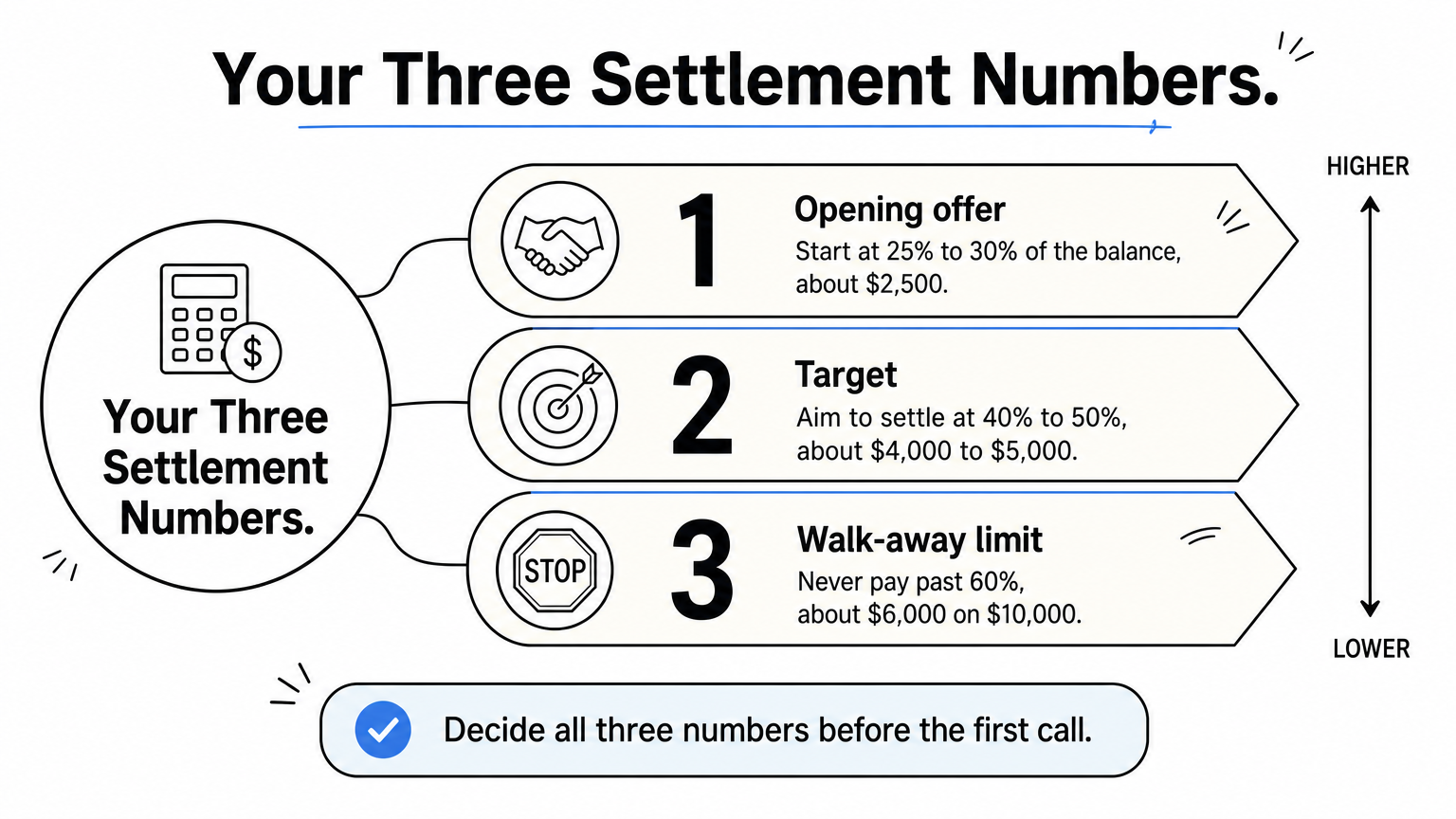
| Number | Share of balance | Example on $10,000 |
|---|---|---|
| Opening offer | 25% to 30% | $2,500 to $3,000 |
| Target | 40% to 50% | $4,000 to $5,000 |
| Walk-away limit | About 60% | $6,000 |
Decide your walk-away number before the first call, and never go past it.
Older accounts and debts already sold to a buyer usually settle lower. Fresh accounts with the original creditor settle higher. If the statute of limitations is close to expiring, open at the bottom of the range.
Step 3. Negotiate the deal and get it in writing
Run the call
Open with your lowest number and stay calm and brief. Say, "I can pay $2,500 as a lump sum if you accept it as payment in full." Expect a counter. Raise your offer in small steps of 5% to 10%, pausing after each one. Write down the rep’s name, the date, and every figure discussed.
Get the terms in writing
Before you send a dime, require a written settlement agreement that covers every point of the debt-collection settlement. It should state:

- The account number and who owns the debt
- The exact amount and the due date
- That payment resolves the balance in full
- That the collector will stop collecting and report the account as settled
No written agreement, no payment.
If the collector will not put it on paper, walk away or ask for a supervisor. Once you have the document, read it closely, then keep a copy of it, along with proof of payment, for at least seven years.
Step 4. Pay safely and handle credit and tax effects
Make the payment safely
Pay only after you hold the signed agreement. Use a traceable method, such as a cashier’s check or a one-time debit authorization, and never give the collector standing access to your bank account. Within 30 days, ask for a paid-in-full letter showing a zero balance.
Pay only against a signed agreement, and keep proof of every dollar you send.
Expect credit and tax effects
A debt-collection settlement appears on your report as "settled for less than full balance." The mark can stay up to seven years from the first missed payment. Check your free reports after 60 days and confirm the balance reads zero, then dispute anything wrong.
Taxes catch people off guard. Forgiven debt of $600 or more usually triggers a Form 1099-C, and the IRS generally treats canceled debt as taxable income. If you were insolvent when the debt was forgiven, Form 982 may let you exclude it, so ask a tax professional before you file.
Settling with confidence
A debt-collection settlement works when you treat it as a negotiation, not a confession. Verify the debt, check the time limit, set your offer ladder, and get every term in writing before you pay a dollar. Do those things and you hold most of the leverage, even when the collector sounds certain on the phone.
Remember the trade-offs, too. Settling will leave a mark on your credit and may bring a tax bill, but it often costs far less than years of climbing interest and daily calls. If your credit is still strong or you can repay over time, compare other options first.
Ready to weigh your choices? Read our guide on debt settlement vs. debt consolidation at Credit Card Solution to see where settlement fits and pick the path that matches your credit score and budget.


