
Debt settlement pros and cons come down to one trade: you may repay less than you owe, but you pay for it with credit damage, fees, possible taxes, and real uncertainty. Settlement is a reasonable move if you are already far behind on unsecured debt, cannot qualify for a consolidation loan or balance transfer, and can gather a lump sum. It is a poor move if you are current on your bills, hold a score above 700, or could still qualify for cheaper options.
Most people reach this decision while minimum payments eat their budget and balances barely move. Settlement companies advertise a way out, and they sound a lot like free help. They are not. You need to see what the offer costs before you sign.
Below are the five biggest factors in the decision, two advantages and three drawbacks. Each one gets the same three checks: how it works, what to watch for, and who it favors. That makes it easy to compare them against your own situation. CreditCardSolution.org is an educational site, not a settlement company, so we have no enrollment to sell you.
1. Pro: you can repay less than you owe
Debt settlement can reduce the principal balance, which is the one benefit that interest-rate fixes such as a balance transfer or a debt management plan cannot match.

How it works
In a settlement, a creditor accepts a lump sum smaller than the balance and forgives the rest. It applies to unsecured debt such as credit cards, personal loans, and medical bills. Mortgages and car loans are secured by collateral, and federal student loans follow their own rules, so those are generally off the table. Most settlement companies have you deposit money monthly into an account you control. Once enough accumulates, they make offers.
What to watch for
Your creditor sets the discount, not the company. Be wary of any firm that promises a specific percentage off. Results depend on how delinquent you are, how large your lump sum is, and whether the creditor thinks you might file for bankruptcy. Some creditors refuse to deal with settlement companies altogether. When you do compare the pros and cons of debt settlement, remember the discount is only the gross figure. Fees and taxes come out of it, as section 4 shows.
Settlement is the only common option that cuts the balance itself, but the creditor decides how much.
Who it favors
It favors people with a hardship that is real and documented, such as job loss or medical bills, who cannot repay in full within a few years. If you can pay the balance in 36 to 60 months with a lower rate, you probably do not need to take the hit that comes with settling.
2. Pro: a way to avoid bankruptcy
A settlement can resolve debt without a court filing, which makes it a possible alternative to bankruptcy for people who still have income.
How it works
Settlement is a private agreement between you and the creditor. No court record is created, unlike with bankruptcy, which can stay on your credit report for seven to 10 years. Once you pay the agreed amount, the account is closed as settled, and collection calls about that debt should stop.
What to watch for
The relief is narrower than it sounds. Creditors can still sue you while you negotiate, and collectors can still call about accounts you have not settled. The settled account itself remains a negative mark. This is why debt settlement companies pros and cons lists always include a caution: settlement avoids bankruptcy only if it actually succeeds. If it fails after two years of missed payments, you may end up filing anyway, with more fees and interest behind you.
Settlement spares you a court record only if the settlements actually close.
Who it favors
It suits people with sizable unsecured debt, steady income, and few assets to protect. If you own very little and have almost no chance of settling, bankruptcy may be the cleaner route. A nonprofit credit counselor or a bankruptcy attorney can look at your numbers before you commit to either.
3. Con: your credit score takes a hit
Settlement almost always damages your credit, both while you negotiate and after the account is settled.
How it works
Companies commonly tell you to stop paying creditors so you can build up your settlement fund. Each missed payment is typically reported as late. Payment history makes up about 35% of your FICO Score, so the damage compounds quickly. After roughly six months of non-payment, a credit card is often charged off. The settled account is then reported as paid for less than the full balance.
What to watch for
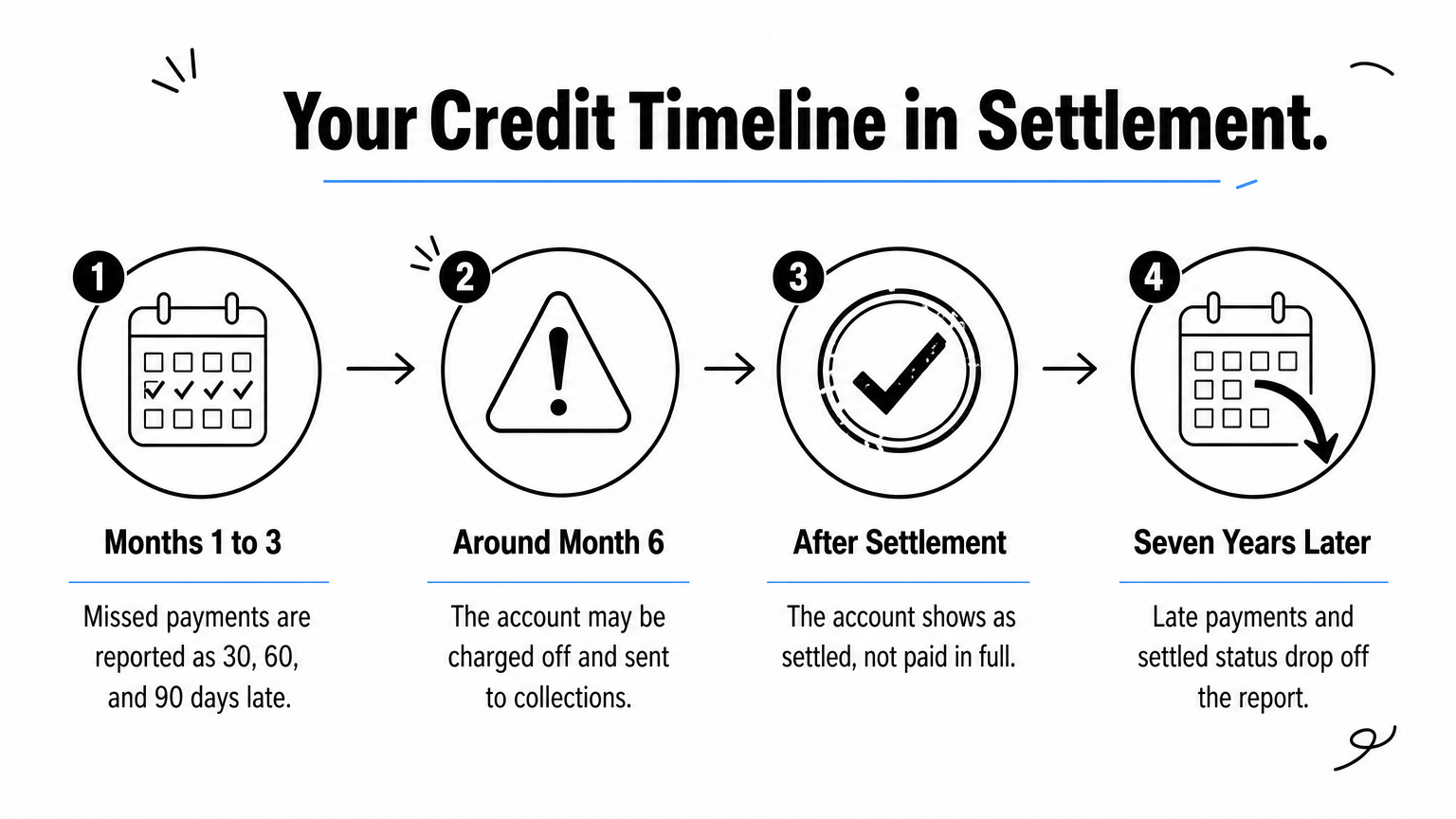
Here is a rough timeline of how the debt settlement pros and cons play out on your report:
- Months 1 to 3: missed payments appear as 30, 60, and 90 days late.
- Around month 6: the account may be charged off and sent to collections.
- After settlement: the account shows as settled, not paid in full.
- Seven years from your first missed payment: the late payments, charge-off, and settled status fall off.
You pay for settlement with your score before you ever see a savings.
Who it favors
It costs least if your score is already damaged and you are behind anyway. If you hold a 700-plus score, you have the most to lose, and a balance transfer, consolidation loan, or nonprofit debt management plan will protect your credit far better.
4. Con: fees and taxes shrink your savings
Fees and taxes can eat a large share of what settlement saves you, so work out the net figure before you enroll.

How it works
Settlement companies typically charge 15% to 25% of the debt you enroll. Under federal rules for telephone-based debt relief, they cannot collect a fee until they have settled at least one debt and you have made at least one payment toward it. On the tax side, forgiven debt of $600 or more is generally treated by the IRS as income, and your creditor may send a Form 1099-C.
What to watch for
This illustration uses a 20% fee on enrolled debt and a 22% federal tax bracket:
| Item | Amount |
|---|---|
| Enrolled debt | $20,000 |
| Settled for 50% | $10,000 |
| Company fee (20% of enrolled) | $4,000 |
| Total you pay | $14,000 |
| Tax on $10,000 forgiven (about 22%) | about $2,200 |
| Real savings | about $3,800 |
You may avoid the tax if you were insolvent when the debt was forgiven. The IRS explains canceled debt and the exclusion. Also note that interest and late fees accrue while you wait.
A $10,000 discount can shrink to under $4,000 once fees and taxes are counted.
Who it favors
It favors only those who run this math first. Ask for the fee structure in writing, and ask a tax professional about insolvency before you assume you owe nothing.
5. Con: there is no guarantee it works
Debt settlement is a gamble, and the honest answer to "do debt settlement companies really work" is sometimes, not reliably.
How it works
Creditors are not required to negotiate. A program can take two to four years, and during that time you are usually delinquent. A creditor may sue, and if it wins a judgment, your state’s rules may allow wage garnishment or bank levies. Scams add risk. Warning signs include upfront fees, guaranteed results, and advice to cut off all contact with creditors.
What to watch for
Before you ask whether debt settlement is a good idea, check the company. Contact your state attorney general, search complaints with the Consumer Financial Protection Bureau, and compare the contract against the fee rules above. Also price the alternatives. A balance transfer card often carries a 3% to 5% fee and an introductory 0% rate. A debt consolidation loan needs decent credit. A nonprofit debt management plan typically repays debts in full over three to five years with reduced interest.
If settlement fails, you keep the credit damage and lose the time.
Who it favors
Settlement is a good option when you are already seriously delinquent, your debts are unsecured, no cheaper option accepts you, and a lawsuit or bankruptcy looms. It is a bad idea when you are current, your credit is decent, or you can negotiate directly with creditors for free.
Weigh it, then decide
Debt settlement can cut what you owe and spare you bankruptcy, but it hurts your credit, costs real money in fees and taxes, and offers no promise of success. If you are already behind with no better option, it deserves serious consideration. If you are still current, start with cheaper tools.
Run the numbers on your own balances, check the company’s record, and compare each alternative honestly. To see how balance transfers, consolidation loans, and debt management plans stack up for your credit score, read our pros and cons of debt relief programs comparison and choose the route that fits.