
Carrying a credit card balance at 24% interest is exhausting. You make the minimum payment, watch the balance barely move, and wonder what you’re missing. Often the missing piece is not more income. It’s a plan, and a different way of thinking about money. That is where the best books on how to get out of debt earn their place on your shelf.
Here is the short answer. Pick the book that matches your problem. If you need a step-by-step payoff system, read a debt snowball style guide. If your spending habits keep putting you back in the hole, choose one that tackles money behavior and mindset first. Most of these books take a weekend to read and cost less than one month of interest on a $5,000 balance.
Below, you’ll find five books on getting out of debt, each with a quick summary, who it fits best, and the main idea you can use right away. Read the summaries, choose one, and start paying down your balances this week, not next year.
1. The Total Money Makeover by Dave Ramsey
What the book teaches

This is one of the most popular books on how to get out of debt, and the reason is its simplicity. Ramsey builds everything around seven "Baby Steps," and the first three do the heavy lifting. The core tactic is the debt snowball: list every debt from smallest balance to largest, ignore interest rates, and pay off the smallest first.
Each small payoff frees up cash for the next debt, so momentum does the work that willpower can’t.
- Save a starter emergency fund ($1,000 in the book).
- Pay off every debt except your mortgage, smallest balance first.
- Build three to six months of living expenses.
Who it is best for
Anyone staring at several card balances at once will like the structure. Ramsey writes in a blunt, motivational voice, and you can start the plan on your next payday. It suits you if you need quick wins to stay motivated more than you need perfect math.
He also tells you to stop using credit cards completely and switch to cash or a debit card. If you have slid back into swiping more than once, that hard reset on spending can be exactly what breaks the cycle.
Limitations to know before you start
The catch is the math. Ignoring interest rates means you can pay more interest than necessary, especially if a 29% card sits behind a 9% one. The avalanche method, which targets the highest rate first, costs less overall, though it feels slower at the start.
Credit scores get little respect here. Ramsey dismisses them, which is a problem if you plan to finance a car or buy a home soon. Plan on fixing your credit score over time separately, and treat his investing return assumptions with some skepticism.
2. Your Money or Your Life by Dominguez and Robin
What the book teaches
Among the best books on how to get out of debt, this one attacks the root question: what is your money really costing you? The authors treat every dollar as life energy, meaning the hours you trade at work to earn it. Their nine-step program starts with three habits:
- Track every penny you earn and spend.
- Calculate your real hourly wage, after commuting and work costs.
- Ask whether each purchase gave you fulfillment in proportion to the hours it cost.
A purchase is never just a price. It is hours of your life.
Who it is best for
Pick this up if you keep slipping back into debt despite having a payoff plan. It suits readers who feel their spending and their jobs no longer match their values.
Tracking also helps if you have no idea where your paycheck goes. The monthly tally exposes spending leaks within weeks.
Limitations to know before you start
Payoff mechanics are thin. You won’t find a debt ordering method or negotiation tips, so pair it with a payoff system like the snowball.
Some investing advice dates from the 1990s, and the full program takes months of steady effort. Expect a philosophy more than a quick fix.
3. I Will Teach You to Be Rich by Ramit Sethi
What the book teaches
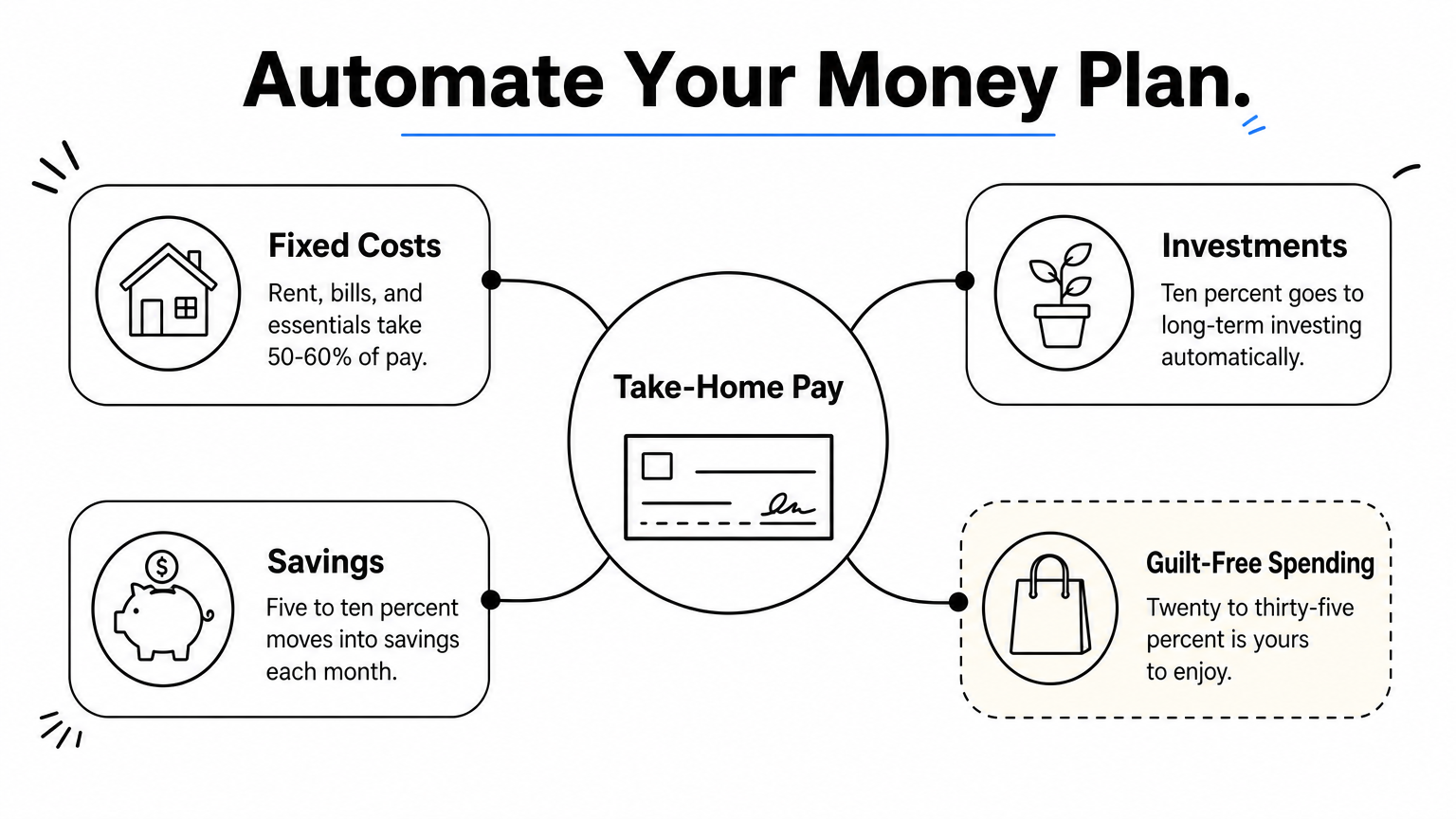
Sethi’s six-week program makes money automatic, which puts it among the best books on how to get out of debt for people who hate budgeting. You build a conscious spending plan, then let automatic transfers run it.
| Bucket | Share of take-home pay |
|---|---|
| Fixed costs | 50-60% |
| Investments | 10% |
| Savings | 5-10% |
| Guilt-free spending | 20-35% |
Beyond the plan, he gives word-for-word phone scripts for credit card debt negotiation, such as asking your card issuer to waive fees or lower your APR. A five-minute call can cut your interest before you pay an extra dollar.
Automate the plan once, and good money habits stop depending on willpower.
Who it is best for
Earners with steady income and no system for their money get the most from it. If you hate tracking receipts, automation fits you better than line-item budgets.
It also suits anyone with moderate card debt who wants to pay it down while still investing a little.
Limitations to know before you start
Debt gets limited space. Sethi covers payoff in a single chapter, so pair it with a dedicated payoff method like the snowball.
His tone is brash, and the investing sections assume spare cash each month, which you may not have if you’re struggling with minimum payments.
4. The Energy of Money by Maria Nemeth
What the book teaches
Nemeth is a psychologist, and her premise is that money behavior follows your emotions and beliefs, not your math skills. Among the best books on how to get out of debt for people who feel stuck, it works by changing your relationship with money through short written exercises:
- Write down what you want your money to do for you.
- Notice the stories you tell yourself about debt and spending.
- Set small, specific goals and check them weekly.
Until you change how you feel about money, a payoff plan keeps losing to old habits.
Who it is best for
Choose it if you feel shame or avoidance when you open a card statement. It fits readers who have tried budgets before and keep sabotaging them without knowing why.
It also pairs well with a snowball plan, because the exercises help you stay consistent when motivation dips.
Limitations to know before you start
The tone is reflective and a bit spiritual. If you want hard numbers, you won’t find a payoff formula, interest comparisons, or lender call scripts here.
Results depend on doing the exercises, not just reading them. Skim this one and you gain very little, so set aside time to write each week.
5. Financial Recovery by Karen McCall
What the book teaches

Financial Recovery is one of the more unusual books on how to get out of debt, because it treats overspending and avoidance as habits you can recover from. McCall, a financial recovery coach, walks you through facing your real numbers without self-judgment.
- Gather and open every bill and statement.
- Track each purchase for a few weeks.
- Build a spending plan around what you actually find.
You cannot fix a debt you refuse to look at.
Who it is best for
Readers who feel ashamed or overwhelmed, or who stash unopened statements in a drawer, will find this gentler than Ramsey’s tough-love approach. The pace is slow and supportive.
It also suits emotional or compulsive spenders who need a steady process more than a payoff formula. If a budget has never lasted a month for you, start here.
Limitations to know before you start
Like Nemeth’s book, this one leans on exercises over arithmetic. You’ll find little on payoff order, interest comparisons, or negotiating with card issuers, so pair it with a snowball or avalanche plan.
Tracking takes patience, and the process works only if you keep doing the exercises. Expect to adapt its methods to a spreadsheet or budgeting app.
Picking the book that fits your situation
The right pick depends on your problem, not on which title is most popular. If you need a clear payoff system, start with Ramsey. If spending habits keep pulling you back under, try Dominguez and Robin or Sethi. If you avoid opening your statements, Nemeth or McCall will meet you where you are.
Even the best books on how to get out of debt only work when you act on them. Pair a mindset book with a snowball or avalanche plan, then take one concrete step this week. Open every statement, or call your issuer and ask for a lower APR.
Once you have a plan, compare your real payoff options side by side. Our guide to the pros and cons of debt relief programs explains balance transfers, consolidation loans, and debt management plans in plain language, so you can choose the route that fits your credit score.



)